Monday, February 26, 2018

A Short Treatise on French Electronic

Playlist time!  A colleague at work asked for recommendations on French electronic, a genre I was quite into in the early 2000s.  So here are my top pics and recommendations if you want to get into the French electronic scene :)
YouTube

1. Air's seminal 1998 album "Moon Safari" is a classic.  The whole album is a great example of the downtempo and lounge genres.  The rest of their discography is pretty great too.
"La Femme d'Argent" from "Moon Safari"
"Sexy Boy" from "Moon Safari"

2. You, of course, know Daft Punk, but DP's manager Busy P is an electronic legend.
"Genie" a 2017 single
"Rainbow Man" from the 2014 album "Reworking is Not a Crime"

3. Justice, takes DP's "Aerodynamic" style and mixes it with rock, Kraftpop, and French house.  Also managed by Busy P.  Their 2007 debut album "Cross" was a revelation.
"Genesis" - from "Cross"

4. Étienne de Crécy has been a longtime electronic producer, and "Super Discount" was fantastic for 1998; I mean Daft Punk's "Homework" and Air's "Moon Safari" had just released!
"Super Disco" from "Super Discount"

5. M83 I'm sure you've heard of or heard somewhere.  "Midnight City" was a staple for while on ads and such.  Their 2011 album "Hurry Up, We're Dreaming" and the follow-up 2016 album "Junk" were pretty solid.
"Midnight City" from "Hurry Up, We're Dreaming"
"Reunion" from "Hurry Up, We're Dreaming"

6. I will admit I haven't heard a lot of Kavinsky, but loved "Nightcall" after watching the film "Drive".  "Nightcall" also features vocals from Lovefoxxx of the Brazlian band CSS (check out their song "Alala" for a taste)
"Nightcall" from the 2013 album "Outrun"

7. Finally, Danger.  Not exactly my scene, but curious to hear what others think; it's a little too dubstep-y for me.  He's very weird, his songs are titled with the time he finished recording them.
Playlist for his 2017 album "Taiko" (he does use taiko drums)

On a different vein, but if you like Sigur Ros, Ulan Bator is a solid listen in the French post-rock scene.
"Let Go Ego" from the 2003 album "Ok: Ko"
"Hemisphere" from the 2000 album "Ego: Echo"

Saturday, January 06, 2018

"Hopelandic" or How I Spent More Money on Music than Groceries in 2017

The 2016-17 season has been a great year for music for me personally, so I thought I should recap some of the highlights and finds. Incidentally, I calculated that I've spent more money on concert and music since I graduated Fletcher last year than on groceries.

Rachmaninoff's 2nd Piano Concerto
St. Petersburg Philharmonic
Yuri Temirkanov, and accompanied by an impressive soloist pianist, Nikolai Lugansky.

Chopin 1st Piano Concerto
Philadelphia Orchestra
Dynamic music director Yannick Nézet-Séguin returns with the orchestra and celebrated pianist Louis Lortie

Tchaikovsky's 1st Piano Concerto
Alice Sara Ott with the NSO

Beethoven's 9th Symphony
NSO

Mahler's 5th Symphony
Royal Dutch Orchestra

Quilt
Sinclair, Boston

Dvorak
Hillary Hahn with the NSO

Zakir Hussain and Rahul Sharma
with the NSO
Kennedy Center, DC

Stonefield
9.30 Club, DC

Sigur Ros
Boston Calling and NYC

Tool
Boston Calling

Mitski
Boston Calling

Kevin Morby
Boston Calling

Cage the Elephant
Boston Calling

Run the Jewels
Boston Calling

The XX
Boston Calling

Wolf Parade
Boston Calling

My Boston Calling public playlist on Spotify also includes Weezer, Frightened Rabit, Mondo Cozmo, Tegan and Sara, Moses Sumney, mac DeMarco, Xylouris White, and Car Seat Headrest.

King Gizzard and the Lizard Wizard
9.30 Club, DC

Slowdive
9.30 Club, DC

Japanese Breakfast
9.30 Club, DC

Rodrigo y Gabriela
9.30 Club, DC

Blondie + Garbage
The Wolftrap, Virginia

Depeche Mode
Verizon Center, DC

Giorgio Moroder

9.30 Club, DC

Tuesday, January 02, 2018

One Night On Hoth

Story reads from top to bottom. 
Updates as often I can, but usually on Monday, Wednesday, and Friday.


One day at the Rebel Base, two new chefs came in, ‘cause a Rebel’s gotta eat. But not all is as it seems. Nefarious things are afoot... Find out next time on “Those Rebel Days”.


For they were no ordinary chefs - these were Empire assassins *dun* *dun* *dun*


The assassin chefs corner rebel pilot Cosmo Politan - but it seems like Poe Dumdum is going to get the jump on them. Will the brave Rebels survive? Tune in next time on “The Real Rebels of Hoth”!


But before Dumdum could get the jump on the assassin chefs, help came from an unexpected place! Who is this mysterious savior? Find out in the next installment of “Rebel Run: The Ballad of Cosmo Politan”.


“Hey, who you be brah?” Cosmo asked in his off kilter South Jersey accent. What he meant to say was “thank you for saving my life beautiful stranger.” But who is this mysterious savior in green? Find out next time on “Hoth’s Next Top Rebel”.


He is not the hero the Rebellion wanted, but he’s the hero they needed... illegal alien and savior - Dash Cunningham Jr.  But will the Rebels accept him? Find out in the next installment of “Days of our Alliance”.


Meanwhile, back at the Window Empire, the evil Kylo Ramen was sending his most trusted henchmen - Tweedledee and Tweedledum (no relation) to end the Rebel threat... what new dangers will this bring to our heroes?  Find out next time on "The Rebel Files".


Meanwhile, back at the Hoth base:
Poe: "Cunnigham Jr, was it?  Thanks for saving Cosmo's life here - he's our resident stylist, without him, the Rebel alliance would all be dressed in drab Soviet grey..."
CJ: "Call me CJ.  You know, everyone makes fun of art students, but everyone LOVES designer clothes, graphics, comic books, and animation... see the irony?"
Cosmo: "Brah - did not see this scene headed in that direction, but hey, you're the savior of the day."
... but how will this trio deal with the new threat from the Empire - Tweedledee and Tweedledum?  Find out in the next installment of "Rebel Without a Cause".


And then suddenly...
Tweedledee: "Reach for the sky you Rebel scum"
Tweedledum: "Yeah, and put your hands up too"
Tweedledee: "That's what I just said!"
Tweedledum: "Oh?  I was wondering why you asked them to get sky in a cave - it was weirdly inspirational... sorry..."
How will our heroes escape from this new predicament?  Find out next time on "Rebelholics".


“But, OMG, I totally love your uniforms, is that Hugo Boss?” exclaimed Cosmo Politan, much to the surprise of TnT. Is this a ploy, or does Captain Cosmo really go gaga for fashion? Find out in the next exciting installment of “The Rebel World”


“You know what this means? Fashion show! Work it people!” exclaimed Cosmo Politan. There was something magnetic about his voice and suddenly TnT, Poe, and Cunningham Jr. found themselves walking the runway... What will the evil empire do now that TnT have been ensnared? Find out next time on “Project Rebelway”


Bonus: And afterwards, the gang did a conga line to celebrate!


"We need to form a band" decided Cosmo, "give the Cantina band a run for their money!" In the middle of “YMCA” band practice that night, Cosmo exclaimed, “Damn it, where’s an Indian chief when you need one!”  Will Cosmo make his dreams of making it big in the Tatooine music scene come true, or does the Empire have other plans? Find out next time on, “Dancing with the Rebels”


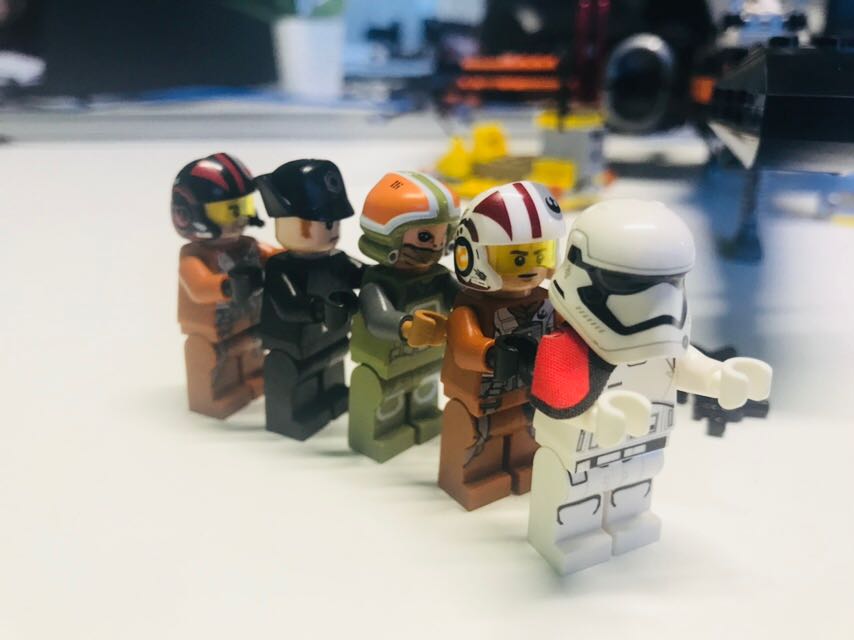
Every boy band needs a classy album cover.  Album cover shoot for boy band sensation “The Rebel Boys” 😎


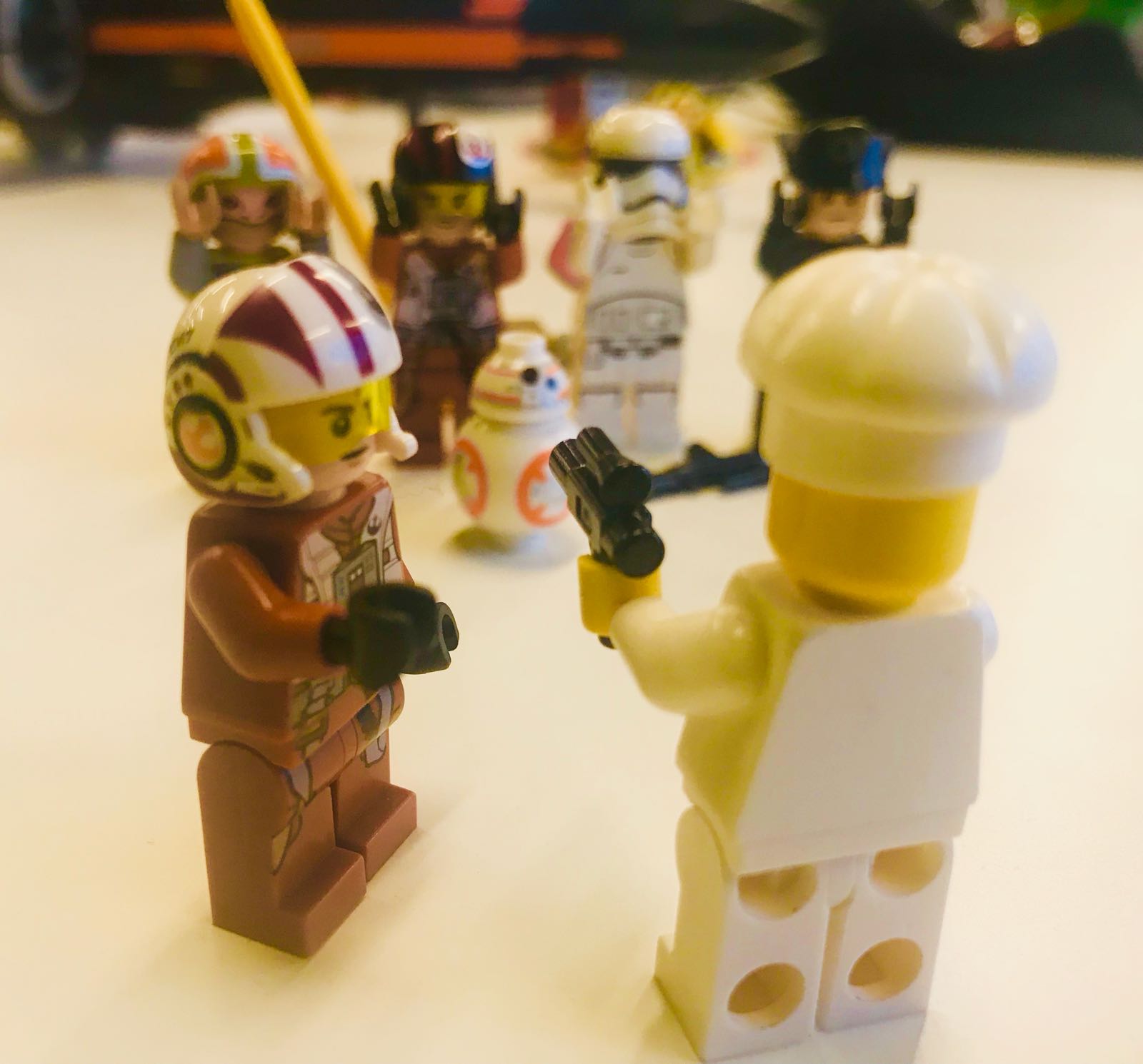
Tweedledee, however, was upset to be left out of the album cover and resorted to his baser instincts.  Sometimes, when you can’t work out your differences through dance, it results in a Mexican standoff. To be continued... *dun* *dun* *dun*!


Meanwhile, back at White Table, the Imperial Base, evil Lord Shiny Top (aka Kylo Ramen) was back for a progress report on dealing with the Rebels... heads were going to roll (and rock)... what will Shiny Top do next? Find out next week on “Empire”!


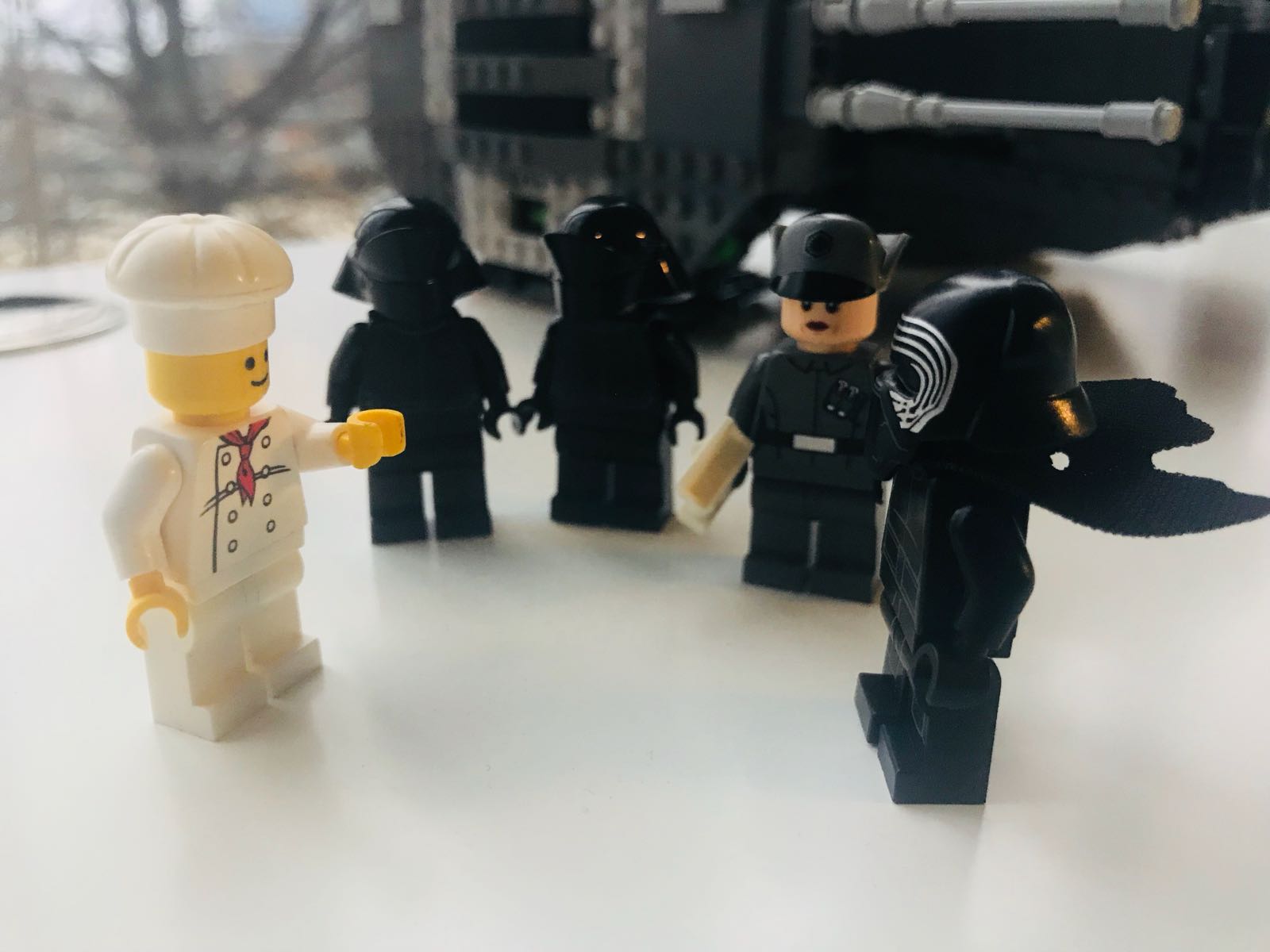
Kylo Ramen: “Ah, my assassin chefs, did you take care of the Rebels?” 
Chefs: “Yes, sir, they’re quite well fed and healthy!” 
Kylo Ramen: *face palm*


“Mr. Takagki won’t be joining us for the rest of his life” said KR, decapitating one of the assassins in a fit of rage. 
“Woah, goncho, we really lost our head chef now, get it, get it?” exclaimed the remaining assassin. 
“Careful, assassin, you don’t want to be pun-ished too...” said Kylo Ramen menacingly.  What evil plans do the Empire have for our heroes? Find out next time on “Hoth’s Next Top Rebel”


Bonus: In the evenings, Kylo liked to play Hamlet at the local Shakespeare in the Park production... “To be or not to be, that is the question...” - good thing he had a fresh skull to work with!


Kylo Ramen: "I'm leaving you with my two subordinates, Ping and Pong... don't fail me again, Chef"
Chef: "A Hot Topic sale going on somewhere eh?  Or is there an emo music festival on Korriban?"
Kylo Ramen: "At least I don't wear an albino mushroom on my head - why do chef's wear that?  Storage?"


Kylo Ramen: “Daft Pink brothers, I think it’s best I leave the only female character in this story to help you with your job... she’s pretty evil and excellent at paperwork, her name is Anne Chovy.”


Meanwhile on Hoth:
“You want to make it in the boy band industry, you gotta work for it ladies, work it, work it!” - Cosmo was running a hard boot camp at HQ to get the team ready for their big debut on “Hoth’s Got Talent”, unaware of the danger looming...


Meanwhile back on Tabletop, Kylo Ramen was taking a well earned break from evil, enjoying a MaiTai and some shade... 
Chef Assassin: “Curses, I should have read the fine print on the internship contract...”


Due to his popularity Kylo often has to do interviews and TV spots, here is KR filming an episode of “Pimp My Shuttle”.


Sometimes Cosmo dreamed of being in a galactic production of "West Side Story"... of course, he would be a Jets...


But while the Rebels and the Empire were busy in their own plots, on the third day, one chef arose from the dead - and he was pissed. What shenanigans will ensue next, find out next time on “The Passion of Chef”.


And as the gang was preparing for their big debut, unbeknownst to them... evil was lurking close behind. How will our young heroes escape this predicament? Find out next time on “Say yes to the Rebel dress”!


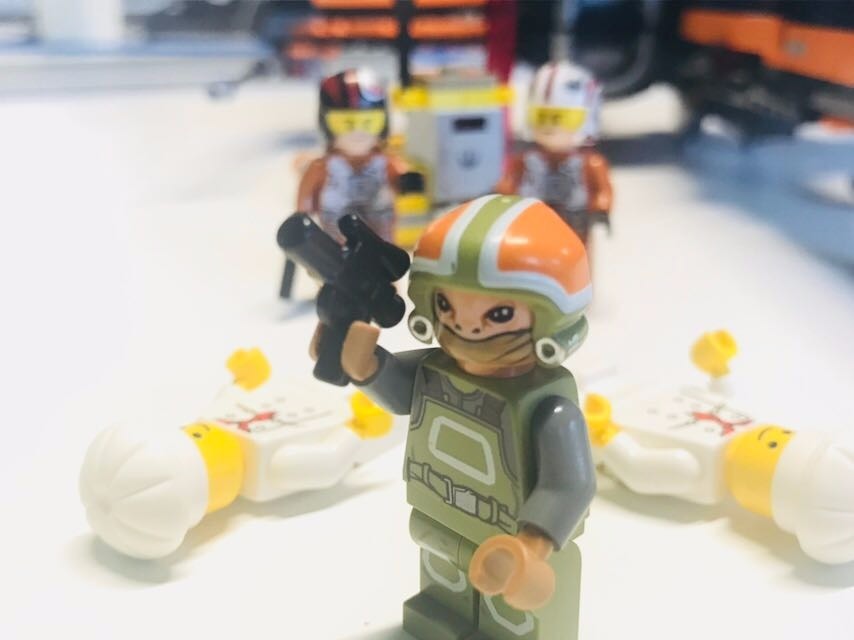
“Not so fast, you wannabe Guy Fieri” - exclaimed CJ drawing his blaster. Oh, damn, shit was gonna go down! Who’s going to bite the stardust? Find out next time on “30 Rebel”!


“Hey man, you don’t have to do this - you’re in a safe place now - you don’t need to pretend to be a chef, an assassin - there are no Rebels, no Empire - we’re all just people trying to get by - why don’t you just come and dance with us?” Reasoned Cosmo... 
“I would, but you have a dirty illegal alien” said Chef pointing at CJ. 
“Wow, a racist chef assassin - that’s original.” sighed Cosmo...
What will happen next? Find it next time on “Rebelville”...


“Yes, yes, you’re right, all my life I’ve killed and killed, just to make my daddy proud, but all I really wanted to do was cook and dance and get rid of the illegal aliens plaguing our galaxy - preferably at the same time...” mused Chef as Cosmo put a comforting arm on his racist shoulder.  
Will Chef exact revenge or will he join the Rebels? Find out next time on “The Barefoot Rebel”.


And to drive home all the possibilities the future held, FlyFlyDrink the droid, did his trademark space sombrero act. Will this be enough to convince Chef to give up his evil ways? Find out next time on “The Rebel Idol”


And lo! That did the trick; Chef gets into the act and becomes the center piece of the Rebel Pole. But will this be enough to sate his thirst for revenge? Find out next time on “The Inglorious Rebels”.

Wednesday, December 20, 2017

Zimbabwe Primer: Major Urban Consumer Concentrations

Since Zimabwe is in the news: a quick analysis on the consumer class in the major cities of Zimbabwe.  Read more here.

Friday, December 01, 2017

Why Do Economic Links Matter in Tackling HIV/AIDS?

For the One Campaign, Fraym created a Connectivity Index, which measures how people and goods move across Africa, to display how significant the economic interaction is between high-burden countries and their neighbors. A reduction in access to treatment in economic hubs like Johannesburg and Lagos could have negative impacts across the continent.


Read more here.

Tuesday, November 21, 2017

Why Nakumatt Went Down in East Africa

Using geostatistical techniques and on-the-ground expertise, Fraym explores why supermarket chain Nakumatt failed in East Africa with a case study in Kampala.  Read more here.

Thursday, October 26, 2017

Who’s Ready to Adopt Digital Financial Services?

Fraym's analysis of digital financial inclusion in Africa for the IFC.

African consumers are the global leaders in the adoption of digital financial services like mobile money. Yet traditional banks and emerging digital providers both continue to grapple with how to expand financial inclusion.  It can be expensive and difficult for financial services providers to figure out the most useful product offering and understand the market. Most providers find themselves with two options: expensive primary data collection or blindly introduce a product to the market and see what happens.

At Fraym, we’ve been thinking about how to approach this in a more strategic and efficient way. By harnessing our comprehensive demographic, expenditure, and geospatial data, we can determine who’s ready for a digital financial services product – the optimal customer – and where providers should target.

Read more here.

Wednesday, September 20, 2017

Chickpea salad (on toast, cause, we don't go nowhere without toast)

I woke up this morning craving it, asked Katie P for the recipe, and voile:

What you need:
1 can of chickpeas, drained and rinsed (obviously)
2 tablespoons very thinly sliced black olives (chopped even)
2 tablespoons finely chopped red onion
2 tablespoons chopped fresh parsley (depends on how you like it)

1 tablespoon finely chopped Thai green chilis or jalapeno peppers (optional but c'mon we all crave the kick!)
Zest and juice from a lemon (if you’ve got one of those sad, juice-less lemons, that sucks for you)

Couple of good pinches of salt (I like a nice sea salt or kosher salt)
A few grinds of coarse black pepper

A dash of cumin (optional); or Shaan/MTN chole mix
A few glugs of olive oil (you know what I mean)

Mix everything but the olive oil in a bowl. Very lightly smash the chickpea mixture with the back of a fork. You’re not looking for a hummus-like consistency but something closer to a coarse chop with a few smaller bits to hold it together. Add the glugs of olive oil, mix it lightly and you're done!

This is awesome as a sandwich on toasted bread, and it needs nothing else on it, but, if you want to live on the edge, throw in some harissa, I bet that would also be delicious.

Courtesy of Katie (via ‘wichcraft).  

Tuesday, September 19, 2017

What’s so special about Kenya’s Generation BUMP?

The young African consumer class is a highly prized demographic. Yet finding them can be tricky. Fraym recently used geospatial data to identify and locate Nigerians who are 18-34 years old, educated, and have money to spend. We found 29 million of them and dubbed this valuable demographic slice, Generation BUMP.

What about Kenya?  The Kenyan economy is growing rapidly, while its capital Nairobi is a stand-out performer on the Fraym Urban Markets Index, ranking 10th on the continent for metropolitan economic activity, consumer power, and trade and travel connections. Using neighborhood-level data across the country, Fraym identified Kenya’s Generation BUMP.


Kenya’s Generation BUMP is estimated at roughly 4.5 million strong, with just over 1 million living in Nairobi. But more than just sizable, this group is:

Banked. More than twice as likely to have a bank account (83 vs. 39 percent)
Urban. Three times as likely to live in an urban setting (65 vs. 22 percent)
Mobile. Phone ownership is nearly universal among Kenyan BUMPers at 98 percent (vs. 83 percent for non-BUMPers).
Plugged-in. Media consumption is starkly higher. They are more than twice as likely to regularly watch television (76 vs. 34 percent) or read newspapers (45 vs 18 percent).

Watch this space for more geospatial demographic and consumer analysis in other markets.

Tuesday, September 12, 2017

Impact of Boko Haram on Urbanization

Much attention has been placed on the rapid population growth in metropolitan Lagos. As one of Africa’s megacities and the growth engine for much of western Africa, that focus makes sense. However, the rate of urbanization actually has been much faster in historically less urban states, particularly due to the Boko Haram conflict.

As countries in the Lake Chad Basin continue to defend and rebuild areas affected by the Boko Haram insurgency, food insecurity is swelling across Cameroon, Chad, Niger, and Nigeria. The terrorist organization has caused over 20,000 deaths and displaced 2 million people since 2009 due to both violence and the inability of communities to maintain their farming-based livelihoods.

Where are these dislocated populations going?


See the Story map at Fraym.io

Monday, August 14, 2017

The Great Scooter Convergence in Nigeria

Nigeria has been in the press lately as a poster child for inequality as the income gap between the wealthy and the poor is, by some measures, widening. The World Bank estimates that 86 million Nigerians, almost half the population, live in extreme poverty.

Another way to think about inequality is to look at differences in asset ownership: do the poor possess assets that are associated with middle and upper-class standards of living?

We compared a decade’s worth of asset ownership data from household surveys and discovered an unexpected finding: ownership of scooters and motorcycles across different socioeconomic classes have converged.


Read more here.

Thursday, July 20, 2017

Corridors Are the Key

Today at Youth Connekt Africa ECA's Executive Secretary Vera Songwe noted the need to focus on cities and corridors for greater impact in job creation with data and analysis from Fraym.

Thursday, June 22, 2017

Where are Nigeria’s most dynamic consumers? Introducing Generation BUMP

Kupanda Capital wanted to sharpen its approach to building media and creative companies in Nigeria, Africa’s largest consumer market. They needed to understand which demographic segments were driving these sectors and where they were concentrated. Kupanda partnered with Fraym to use our proprietary geospatial platform to identify young, educated consumers with spending power.

What we found is a special group of Nigerians who are highly Banked, Urban, Mobile, and Plugged-in. We found Generation BUMP.


Kupanda is now using Fraym data at the neighborhood level to pinpoint where these 29 million valuable consumers reside across Nigeria. Watch this space for more analysis from Fraym locating this dynamic demographic in other African markets.


Technical note: To answer this question, Fraym harmonized and enhanced data from a variety of large representative household surveys and other data sources (including UN population, USGS Landscan, and the GeoData Institute) and then applied layers of analytical and econometric methods (including survey-to-survey imputation, small area estimation, and geospatial interpolation).

Thursday, May 18, 2017

Fraym's Africa Urban Markets Index

Africa is in the midst of a massive and historic transformation. Rapid urbanization, rising incomes, a youth bulge, and the diffusion of technology are combining to create exciting future centers of economic growth and opportunity. Richard Florida wrote in Rise of the Creative Class that “human creativity is the ultimate economic resource” and that “denser cities are smarter and more productive.”

Yet, very little data are available about Africa’s burgeoning urban clusters. Most economic, social, and consumer data are provided on a national basis or through costly one-off surveys. Fraym’s proprietary data platform can do better.

For anyone wanting to pinpoint Africa’s largest, wealthiest, and most networked populations, we created the Fraym Urban Markets Index. The Index estimates and ranks every geographic cluster on the continent with at least 300,000 people (n=169 cities) on three dimensions:

  • Economic activity. What is the GDP for the city’s actual geospatial footprint? 
  • Consumers. How many people live in a home with a car, motorbike, television, or refrigerator? 
  • Connectivity. How networked is the city by trade and air travel? 


Three highlights from the Index:

  • Cairo, Cairo, Cairo. The clear winner is Egypt’s capital, which tops the overall index and each of the three dimensions. While Johannesburg (2) and Lagos (3) are not surprising, some of the other Top 10 may be more unexpected, like Luanda (4), Kinshasa (5), and Khartoum (8). 
  • West Africa > East Africa. In fact, the consumer class of Lagos is roughly the same size as all thirteen cities in the East African Community combined. 
  • The Franco-underdogs. Several lesser-known Francophone cities far outranked better-known English-speaking capitals. Douala (23), Yaoundé (24), Ouagadougou (26), and Bamako (28) all outranked Lusaka (30), Kampala (37), Harare (51), and Kigali (61). 
Read the full Fraym Urban Markets Index paper with methodology and more takeaways (including a few other surprises) here.

Tuesday, January 31, 2017

Reading Updates for the Month: January 2017

A technology heavy reading list for the month.

How Statistics Lost Their Power - And Why We Should Fear What Comes Next
The Guardian, The Long Read
Thursday, 19 January 2017

The Data That Turned the World Upside Down
Vice, Motherboard (originally published in Das Magazin)
Saturday, 28 January 2017

The Great A.I. Awakening
The New York Times Magazine
Wednesday, 14 December 2016

Tuesday, November 22, 2016

Butter Chicken (Maybe)

Recipe for my experimental butter chicken.  Recipe is for 2 pounds of chicken, usually serves about 5 people.  Adjust ratios (or not) for different measures.  Use fresh ingredients when you can.  Will take about an hour and a bit if you're efficient.

Ingredients:

  • Chicken thigh filet cut into small pieces (works with drumsticks and bone-in just as well; try not to use breast though; gets too dry)
  • 2 tablespoons ginger paste
  • 2 tablespoons garlic paste
  • 1.5 tablespoons of whole cumin seeds
  • 1 tablespoon red chili powder/cayenne pepper (adjust according to the heat you want)
  • 2 tablespoons coriander powder
  • 2 tablespoons salt
  • 2 tablespoons paprika for color 
  • 2 tablespoons of fenugreek powder or crushed dried fenugreek
  • 1 teaspoon garam masala
  • A fistful of unsalted cashew nuts (salted works just as well, just adjust for it)
  • 3 green chilies (chopped - again adjust for desired heat)
  • 2 onions (medium; chopped; red or white work just as well)
  • 3 tomatoes (medium; chopped)
  • 1 stick of unsalted butter (use real butter, non of that margarine nonsense)
  • A fistful of chopped cilantro for garnishing
  • Oil; water; heavy cream; ketchup

Marinate the chicken with half the garlic and ginger paste, red chili powder, coriander, and salt and set aside for a couple of hours if you can.  If not, no worries.  

Heat the oil in a large skillet, preferably stainless steel instead of non-stick.  When the oil is hot, flash fry the chicken.  Fry till chicken is "browned" (which is weird, because it turns white - *insert your own politically incorrect joke here*).  Don't worry if the marinate sticks to the pan.  Remove the chicken and set aside.  

In the same pan, add the cumin seeds, the onions, green chilies, the rest of the ginger and garlic paste, cashew nuts, red chili powder, coriander, fenugreek, and tomatoes - I prefer to do it in this order.  Then add the water and slowly scrape the browned masala from the bottom of the pan.  Cover, reduce the heat and let it come to boil.  Let it slow cook for an arbitrary amount of time.

Pour the mixture into a blender (Vitamix ftw).  If you don't have a Vitamix let the mixture cool a bit so you don't blow up your blender.  Blend into a fine paste or liquefy depending on the texture you want.

In the same pan, throw in the stick of butter, let it melt and the pan get hot.  Throw in any water that might have oozed out of the chicken that was sitting on the sidelines.  Add the blended mixture.  Add some ketchup (depending on how tangy you want it to be), add some heavy cream (depending on how creamy you want it to be), bring to a boil and then toss in the chicken, add the garam masala, reduce heat, cover and let it cook for an arbitrary amount of time till the chicken is fully cooked (I would say 10-15 minutes should suffice).  

Take off stove.  Garnish with some more heavy cream and the chopped cilantro.  Let it sit for a few minutes and serve.  Voila!  

Should look something like this

Wednesday, November 09, 2016

The Weak Suffer What They Must For the Greater Good?

By allowing people to declare their opinion on any event, Facebook has made it difficult to sway people's arguments using logic (or evidence), since we are less prone to change our mind if we have to redact our opinion or admit being wrong.  Which is why I try not to engage in debates on social media.  Nevertheless, perhaps this will take my mind off Trump.  This is by no means a research paper but all self selective citations are at the end of the post.

On a morning when Donald Trump is the new President-elect in America, I am hit with my friends and colleagues rejoicing in NaMo's demonetization plan to combat 'black' money, calling it "brave, bold, decisive, incisive" and other superlatives.  However, this issue is not, if you will pardon the pun, as black and white as one might initially think.

For the uninitiated, this is what happened.  On Nov 8, at 8 pm, Indian Prime Minister Narendra Modi announced that effective that moment, all 500 and 1000 denomination currency notes will no longer be legal tender.  He explained that this decision will help curb black money and counterfeiting.  You can read a detailed account of what happened in this Reserve Bank of India press release.

Who would not be excited at the prospect of a "bold and decisive" government policy to curb black money, eh?  Certainly the neoliberals sitting in their ivory towers on Facebook love this idea. While the perceived intention of the policy is along the right lines, there are some issues worth considering here.

Modi's sudden call to demonetize, seems much like his earlier schemes like Jan Dhan Yojana... a jumla.  However, while the opening of millions of ‘zero balance’ bank accounts under the Jan Dhan Yojana was a harmless gimmick, the ill-conceived monetary decision this time will inflict costs on the public.

First, nobody knows how much black money is actually in cash, and how much in other tangibles (Hindustan Times).  The 2012 report on the 1978 Janata Dal/Morarji Desai demonetization found that the majority of black money is in benami land, gold, and off-shore accounts.  It did little to combat black money in the "long run". I will admit that there are stronger tracking systems in place now, but there are also knew avenues of laundering (Indian Express).  The big fish have long devised much more sophisticated ways of stashing their money.  The current demonetization is unlikely to touch anything more than a fraction of the present stock of black money in India (HT).

This is what the policy has done so far: In Gujarat, sale of gold increased on 9 November with an increased 20 to 30% premium as people bought gold in exchange of their unaccounted cash.  The Hindu reported that such transactions have been made back dated.  The targets for this policy is already gaming the system, and the working class that barely have any money, let alone black money are the ones paying the toll  (The Hindu).  The liberal elite do not seem to understand this, calling it "a minor inconvenience that will be over in a week".  The worst statement I have read is a comment: "We have to take care of our domestic helps, that's our responsibility."

Having said that, there is definitely an argument to be made for this policy to lower corruption at the mid-level.  My friend Tanmay Shukla made an argument, which I am going to paraphrase:

When folks with black money buy a house in India, to avoid stamp duty people pay half in cash right?  Not jewelry or bullion or other properties.  When a bureaucrat pays another to get a promotion he has to use cash to avoid a second round of negotiations over the value of what he is offering as bribe.  Politicians, whose main reason for being corrupt is that they need a lot of funds, and need to make a lot of payments to stay in power.  So disrupting the currency supply should disrupt corruption.  We are not sure why it did not work in 1978 but casual observation goes against this idea that black money is not stored in cash.  However, one problem with this initiative is that it disrupts the flow and not stock of black money.  It can temporarily cripple people and make them fearful of being corrupt, but then Modi has to take advantage of their handicap to force a more permanent change.  We don't know what he is up to behind the scenes so it might be worthwhile to wait and watch.  Then again it might not.

Second, the demand for Aadhar and PAN cards while exchanging these notes at banks or the post office is an affront to the poor - most of whom are without these documents or the cultural capital to haggle with the institutions demanding them.  According to UDAI statistics, as on Nov 2016 about 80% of the total population have an AADHAR (1.07 billion issued) identification card.  Not including children, that leaves about 200 million people with no way to work around this policy. (UDAI stats shows more than 100% issuance rates for some states, so I would take their numbers with a grain of salt - this is not the first time the administration has inflated numbers, remember the new GDP estimators?)

Moreover, getting an AADHAR card doesn't happen overnight, particularly in remote places - what will they do in the meantime?  I think it is unfair to justify a "long term solution" with such a massive cost, which can have enormous long-term consequences.  Having an attitude that the poor can deal with this minor inconvenience for a couple of days, is naive and high-handed.  The government can do issue some studies of the expected cost to the economy and tax payer through demonetization and re-issuance, and some evidence to support that the black money recovered or destroyed will significantly trump that, otherwise it is simply not justified.  I want to see the mathematical logic of why and how this will work, especially since it did not in 1978.  I can't believe I am actually siding with Mamata Banerjee and Sitaram Yechury on this issue.

The government pushing for demonetization and asking the Reserve Bank to tag along also brings to question the separation of powers between the executive and the central bank.  If this excerpt from former RBI Chair Raghuram Rajan, is anything to go by, I do not think he would have supported it.
"There are alternatives to fighting..."
The decision has created chaos (Reuters), ordinary folks who work on daily wages are stuck with worthless cash and cannot buy basic supplies.  Certain shops are charging a 4:5 ratio to convert cash because banks and ATMs are shut - the BSE SENSEX tanked 6.3% and is forecast to lose more as the economy comes to a grinding halt over the next few days.  It is all good if you have a card and shop at Metro Mart, but it is a difficult disaster to survive for a substantial chunk of the country - the informal economy, which contributes about 20% to the GDP (Guardian).

Starting the 11th of November banks and post offices will allow people to convert their old bills for smaller denominations, but there is also a limit to cash conversion - Rs. 4000 per day.  The cost to banks and folks going to the bank to convert their money everyday will be stressful and hurt business.

Markets in Calcutta were closed today as the majority with purchasing power have very little low denomination cash on hand.  ATMs and banks are closed till the 11th - so what do we do in the meantime?  People are panicking because not everyone has plastic, in fact, the majority live on daily wages, so if you're sitting on Rs. 1,500 in 500 rupee notes and no one is accepting them and you have to change it in a bank and you don't have an ID - you do what anyone else would do - you panic.

Additionally let's not forget the Muslim population who do not use traditional banking systems - they are left out in the cold.

Finally, the skeptic methinks this is a ploy to reduce cash circulation as the UP elections are coming up to prevent ballot capturing.  The idea of issuing 2000 rupee notes will simply reset the system, so how is this a long term solution?  (Economic Times)

The arguments that this policy will do wonders for promoting e-commerce as well has the whole "India Shining" issue written all over it.  As for the contribution of this move in combating terrorism, it is a red herring.  The role of opaque instruments like Participatory Notes, used by FIIs operating in the Indian stock market, are more relevant for financing terrorism than Indian currency notes of high denomination (HT).  However, there is an argument to be made for the short-term increase in the value of the Rupee as there will be a heavy liability lift on RBI's books.

As Prosenjit Bose writes: 

"The real problems ailing the Indian economy lie elsewhere. The amount of stressed loans in the Indian banking system has crossed a whopping Rs. 9 lakh crore, a bulk of which is owed by domestic corporations to the public sector banks, causing a huge debt overhang.  Despite doubtful claims of fast economic growth, revenue mobilization has not shown any signs of improvement and consequently, re-distributive policies have been rolled back.

Under the Modi regime, substantive measures to promote investments, economic growth, revenues and welfare expenditure have been supplanted by gimmicks, PR spins and a brazen pursuit of select corporate interests. The latest instance of a conflict of interest lies in today’s full page newspaper advertisements by an online payment service provider congratulating the Prime Minister for the demonetization announcement."

It seems that the argument is that it is okay for a government to destroy the wealth of several hard working and honest citizens some of whom are in the poorest strata of society because they have no recourse (I include myself in this as I am sitting on cash here in the US and in my apartment in Calcutta that will essentially go to waste) @ 11,000 crore rupees cost to the tax payers to print new money (not including all the legitimate cash that will be destroyed and loss to business and waste of time and energy), create chaos and confusion, slow down the economy, disrupt regular business, not catch any of the really big fish because they have land, gold, and offshore accounts, make no arrests, and reset the black money counter in February after the elections?

Oh, and by the way, those Whatsapp messages your aunt sent you about nano GPS trackers in the new 2000 rupee notes is a hoax.

So what are the alternatives to this sensationalist stunt that hurts the working population instead of actually hitting the real criminals?  For starters, let us get a better understanding of why people engage in the black money economy.  Admittedly, the initiatives by the government to renegotiate the double taxation agreements with Cyprus and Switzerland - great idea.  Convictions based on Panama Papers - super.  Tougher auditing measures - great.  All of these target the top 1% who have about 74% of India's documented and undocumented wealth.  Can we give the poor some respite for a change and hit the ones who really need a punch in the bracket?

16 Nov 2016 Edit: The PM has asked for patience till Dec 30 - I will wait, I wonder if the poor can...

Resources and articles:


Friday, November 04, 2016

Adventures in Rock: Part 1

Part 1: Opening Doors in High School

"There are things known, and things unknown, and in between are the doors" 
~ Ray Manzarek [1] 

Writing about something as subjective as music is a curious and precarious task.  So instead of attempting to create an objective list, let me talk about my personal journey and experiences in discovering rock, naive and sparse, and at times embarrassing, it may be.

Govinda is awesome and I will not apologize for it.
Born in a musically devoid home and educated in a missionary elementary school, by the time I went to high school, my knowledge, exposure, and understanding of music was accidental at best, and abysmally tasteless at worst.  My early years at Doon reverberates with the memory of the common room stereo blaring a combination of David Dhawan's Govinda "Number 1" soundtracks, some version of Now That's What I Call Music, and techno - which is what all the cool kids were listening. At one point, I could sing most of the Backstreet Boys and Britney Spears discography.  Rarely did I hear anything else, particularly since we had no access to the internet or international radio stations in 1998.  MTV and Channel V, though available, had limited diversity and we did not get a TV in the dormitory till 2001, and probably only tuned in to MTV "Most Wanted" for Shenaz Treasurywala.

One of reasons 90s MTV was fun
All that changed in tenth grade.  My friends and I sneaked into the Oberoi House dormitory common room to play table tennis at 7 in the morning on a Sunday morning only to find a senior, Abhishek Singhania, listening to music at a near muted volume.  We spent the morning in quiet harmony, Singhania listening to Simon and Garfunkel and Metallica (an odd pair) and me playing table tennis.  What stayed with me from that morning was a realization of how little I knew about the world of music.
"Like a Bridge Over Troubled Waters" ~ S&G
That summer I picked up a G3: Live in Concert audio cassette from the local Archies store in Dehra Dun on a whim.  I quite enjoyed listening to the distorted guitar sounds of John Petrucci (I didn't know Dream Theater then), Eric Johnson, Steve Vai, and Joe Satriani.  Admittedly, part of the appeal was hipster-ish.  Yes, I also see the irony.  Stemming from G3, I dabbled in picking up some random "rock" albums - Now That's What I Call Progressive, which had no Genesis, King Crimson, Rush, or Yes; Best of Alternative - which introduced me to Puddle of Mudd, Five For Fighting, and POD, Linkin Park, and Limp Bizkit - dark days...

Not pictured: Steve Morse (Deep Purple), John Petrucci (Dream Theater), Yngwie Malmsteen,
Robert Fripp (King Crimson)...
My eleventh grade exchange program to Wanganui Collegiate School in New Zealand was the first time I found a music mentor.  Harvey, who was the house captain of my dorm aptly also named Harvey, was one of the most charismatic people I have met, and quite the ladies man (as much as a high school senior can be).  Harvey literally opened the doors to his music (he had a nice CD cabinet) and for the first time I was introduced to The Doors (again, I had not seen the Oliver Stone film at this point).  Surrounding The Doors were assorted windows to newer scenes like Incubus, Weezer, Pennywise, and the Dave Matthews Band.  But "The Doors"... man.  The extended jam  on "Light My Fire", "Soul Kitchen", "Peace Frog", and of course, "Roadhouse Blues"... I did not smoke weed but Morrison et al made me feel like I understood what it must be like.  Their 1967 eponymous debut album The Doors would be a good gateway drug.

"People are strange when you're a stranger."
Somewhere in between, my English teacher Salim Yusufji brought out Prince and the Revolution.  I was thirteen, in an all boys boarding school.  I would not be caught dead listening to a short effeminate man in frills.  My naive prejudice meant it would be several years before I would re-discover the prodigy of The Artist Formerly Known As Prince - but more on that later.

A seminal experience for me upon my return from New Zealand was getting a copy of Electric Ladyland by The Jimi Hendrix Experience.  By the time I reached "Voodoo Chile (Slight Return)", the last song on the album, I felt I was living on the wrong side of 1968.  This moment sparked my exploration of the 60s - 70s rock scene, what we colloquially call "classic rock" - the subject of Part 2 in this series.

"Excuse me while I kiss the sky."
Quick Fact [2]
"Rock n Roll: The Alan Freed Story": "Rock and Roll" was coined by DJ Alan Freed sometime in the late 60s.  While most people in the music industry in the US would like to forget him after the outbreak of the Payola scandal, Freed's influence and audacity brought R&B to the mainstream at a time when it was considered "black music" and shunned by the bourgeoisie, remains pivotal in the development of modern rock music.
The Father of Rock and Roll
Notes:
[1] This quote is often attributed to Jim Morrison, but was actually first used by The Doors co-founder Ray Manzarek.  It is likely that the quote is influenced by a line in William Blake's The Marriage of Heaven and Hell: "If the doors of perception were cleansed, every thing would appear to man as it is: infinite", or Aldous Huxley's "The Doors of Perception".

[2] I will include one quick fact at the end of each part.